Do You Need Miniatures to Play D&D? Miniatures vs Theater of the Mind
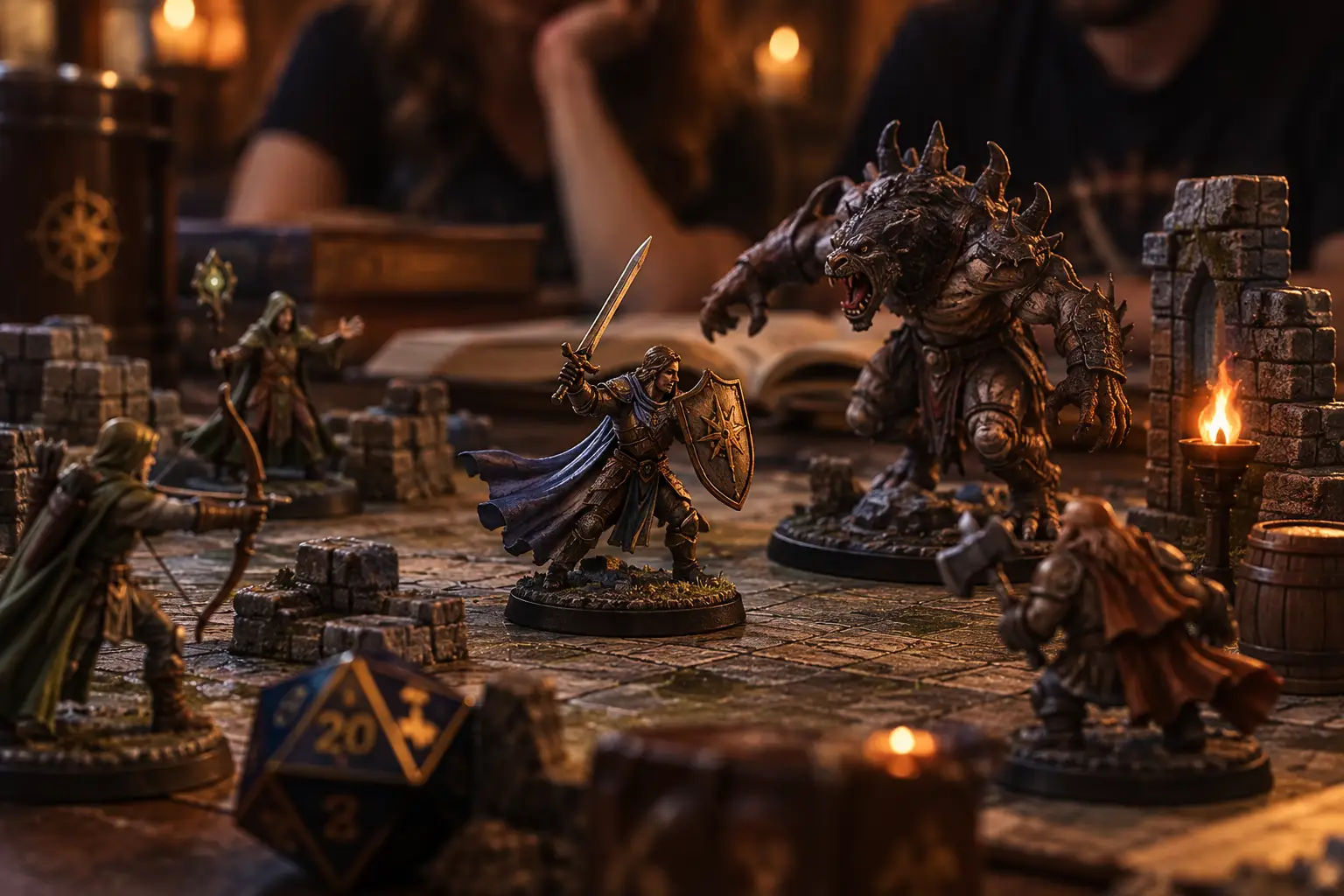
Do You Need Miniatures to Play D&D? No — But They Can Change the Game
There’s a dragon in front of you. Your fighter is somewhere near its left wing, the rogue is hiding behind a ruined pillar, the wizard is probably far enough away from the claws and then somebody asks:
“Wait. Where am I again?”
This is usually the moment someone reaches for a miniature, but let’s answer the question first:
No. You do not need miniatures to play Dungeons & Dragons.
D&D can be played entirely through description and imagination, an approach commonly called theater of the mind. Even the current D&D Basic Rules describe battle grids and miniatures as something some DMs use to help players visualize combat, while also allowing coins, spare dice, paper counters or even pieces of candy to represent creatures when miniatures aren’t available.
So miniatures aren’t your admission ticket to D&D. They’re a tool, and the interesting question isn’t really:
“Do I need miniatures?”
It’s:
“What changes when I put the adventure physically on the table?”
Quite a lot, actually.
If you’re completely new to the hobby, start with [What a tabletop RPG actually is].
First: What Is Theater of the Mind?
Put the miniatures away, remove the battle map, now imagine the Dungeon Master says:
“You enter a ruined chapel. Three skeletons stand between you and the altar. One is close enough to attack. The other two are about thirty feet away beside a collapsed wall.”
That’s your battlefield. It’s just inside everyone’s head.
In theater of the mind, the DM describes the environment, positions and action verbally. Players describe what their characters want to do, ask questions when spatial information matters, and the DM adjudicates the outcome.
D&D Beyond’s own guidance describes theater-of-the-mind combat as an alternative to a gridded battle map and miniatures, with the DM continually describing the situation from each character’s perspective and using quick sketches only when clarification becomes useful.
You don’t need:
• A miniature for every hero
• A miniature for every monster
• Terrain
• A grid
• Or a perfect physical representation of the dungeon.
You need a shared understanding of what’s happening. When that works? Theater of the mind can be incredibly fast.
Why Would You Play Without Miniatures?
Because imagination is very cheap, and has an excellent inventory.
Your adventure suddenly needs:
• A thousand undead soldiers
• A city hanging upside down above an abyss
• A dragon the size of a castle
• A ship sailing through the Astral Plane?
No problem, because the DM describes it, and it’s there.
Running combat without physical terrain or miniatures removes setup and teardown, costs essentially nothing, and allows encounters to move directly from exploration or dialogue into combat without stopping to construct the battlefield. D&D Beyond highlights cost, speed, flexibility and narrative flow as major advantages of theater-of-the-mind combat. And sometimes you simply don’t need anything more.
Three heroes fighting two bandits in an empty road? You can probably remember where everyone is.
Five heroes fighting twelve enemies across two floors of a burning inn while a wizard calculates whether a spell can hit six targets without incinerating the paladin? Different story.
That’s where miniatures begin earning their place.
What Do Miniatures Actually Do?
At their simplest, miniatures answer one question:
Where is everybody?
Your hero is here, the monster is there, the doorway is behind it, the cleric is twenty feet away, the wizard is standing in precisely the wrong place again.
D&D’s current rules explicitly support play on a square grid with miniatures or tokens. When a grid is used, each square represents 5 feet, allowing movement, distance and terrain to be translated directly into visible space.
That gives the entire table the same spatial information. Nobody has to remember whether the owlbear was:
“twenty feet from me or twenty feet from the fighter?”
You can see it, but positioning is only part of what miniatures bring to the table.
Miniatures Turn Imaginary Space Into Shared Space
This is the distinction we find much more interesting. Without miniatures, everyone imagines the scene, but they don’t necessarily imagine the same scene.
You say:
“The troll is standing near the bridge.”
Player A imagines it directly in front of the bridge.
Player B imagines it ten feet away.
Player C thinks they’re already behind it.
Player D has been looking at their spell list for two minutes and has absolutely no idea where anybody is.
Put the troll on a map. Problem solved.
Miniatures externalize part of the shared imagination. The world stops existing entirely inside five separate heads and gains a small physical presence everyone can point to.
“I move here.”
“I attack this one.”
“Can I reach the bridge?”
“Can I hit all three with the spell?”
Those questions become much easier to answer.
That’s especially useful as encounters become more complex. Even D&D’s theater-of-the-mind guidance acknowledges that grids provide a unified understanding of creature and object positions, while purely narrative combat becomes harder to manage as complexity increases.
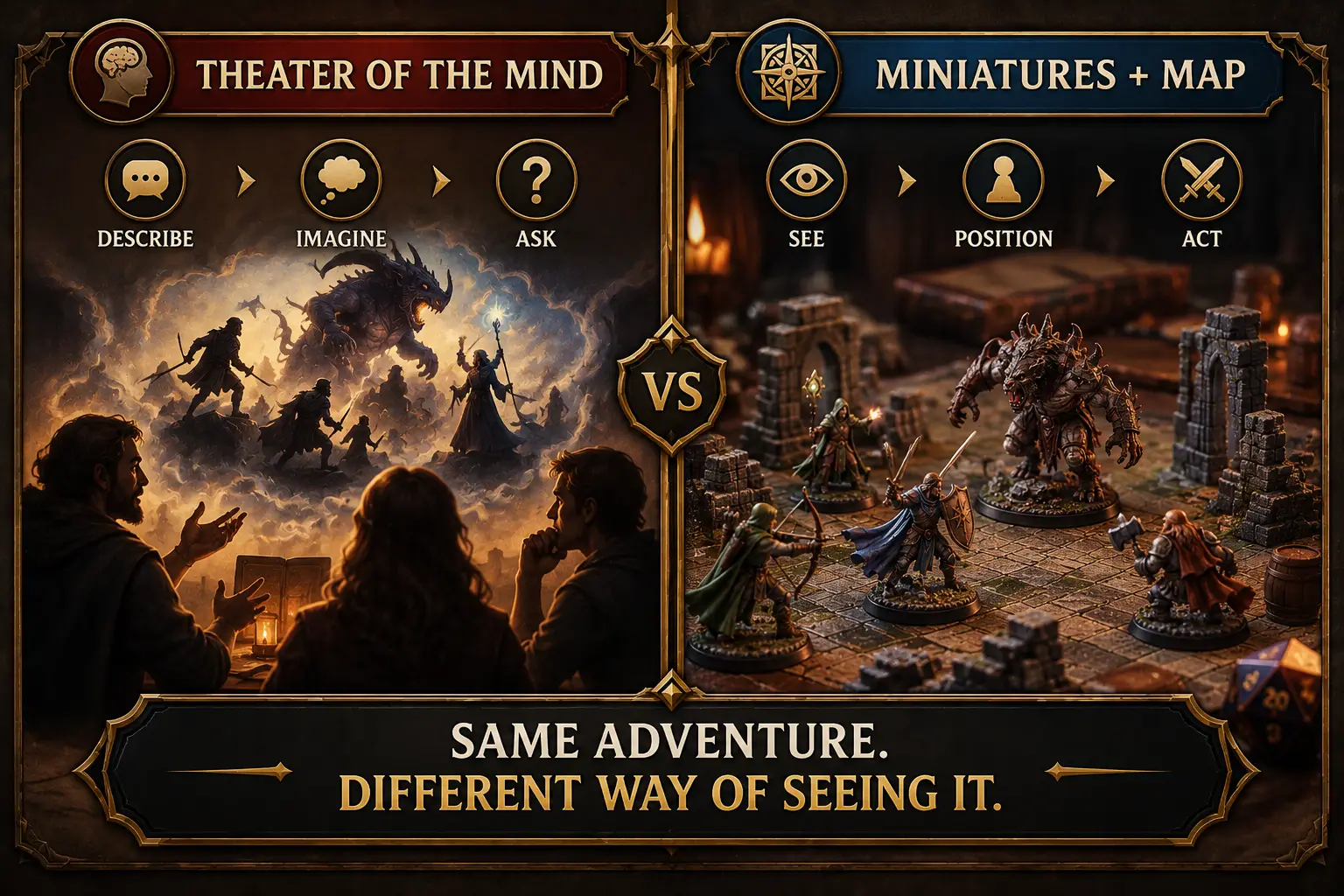
Both approaches still use the same [Basic tabletop RPG gameplay loop].
Miniatures Make Tactical Decisions Visible
Now we reach the part tactical players tend to love. Imagine your fighter wants to protect the wizard. With theater of the mind, the DM can describe their relative positions. With miniatures, you can physically place the fighter between the wizard and the approaching enemy.
You can see:
• Movement
• Range
• Cover
• Terrain
• Choke points
• Enemy formations
• Areas of effect
• And possible escape routes
Suddenly the battlefield becomes a puzzle.
If I move here, can the rogue flank around the other side?
Can I block this corridor?
Can the wizard hit the enemies without hitting us?
What happens if we push the ogre off that ledge?
The map isn’t just showing you the battle. It’s giving you information you can make decisions with. That’s why miniatures tend to become more valuable as tactical complexity increases.
But Miniatures Don’t Make D&D “More Real”
This is worth saying explicitly. Playing with:
• Painted miniatures
• Beautiful terrain
• A professionally illustrated battle map
• And custom scenery
does not make your D&D session more legitimate than somebody playing with: paper, pencils, dice and imagination
You are not playing better D&D. You’re using a different interface for the same imaginary world.
Some groups find physical representation incredibly immersive, others find grids restrictive. Some love tactical combat, others feel the moment the map appears, the RPG temporarily starts feeling like a board game. Both reactions are reasonable.
The goal isn’t to assemble the most impressive table. It’s to use the tools that improve your group’s experience.
Miniatures Can Add Something Beyond Tactics
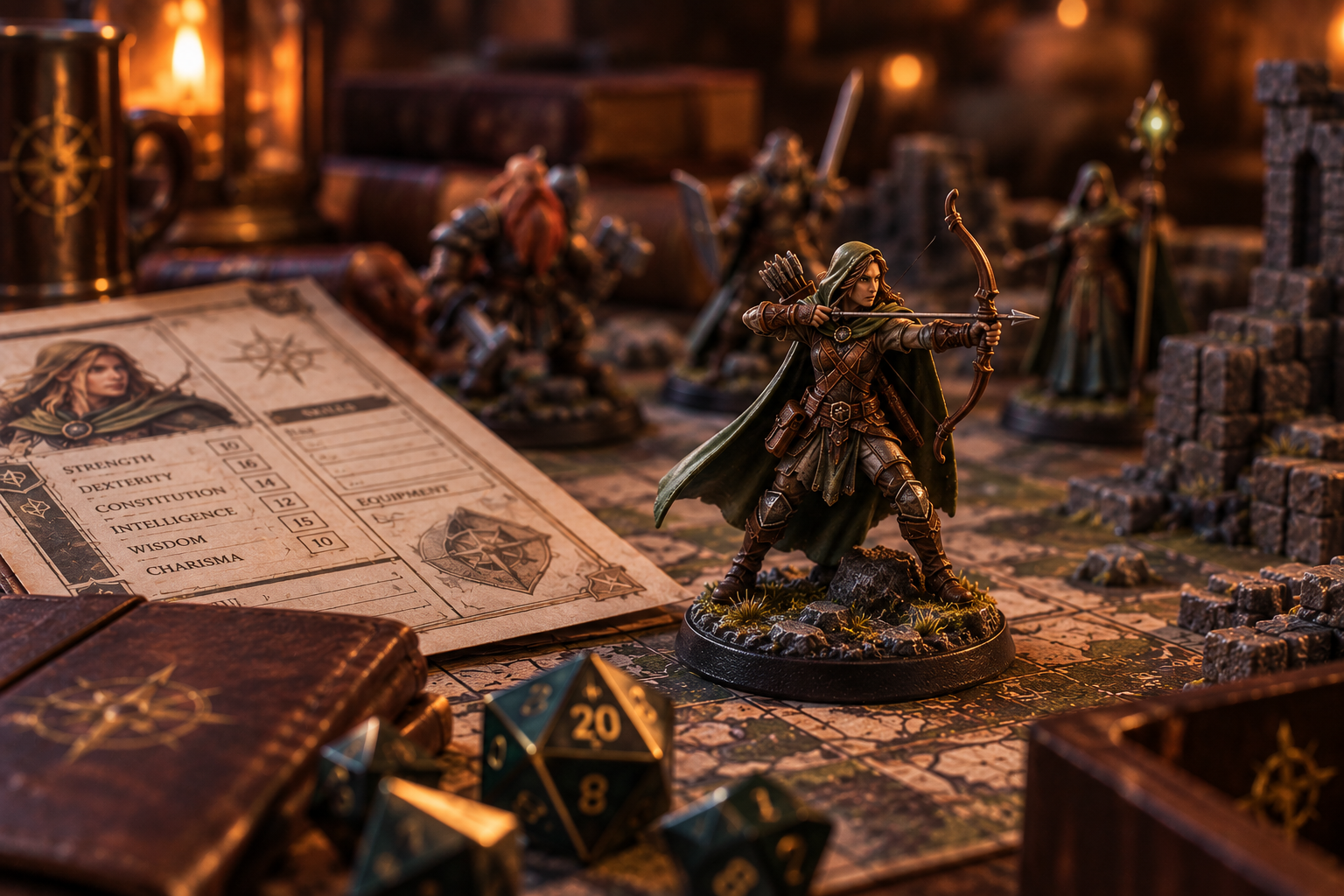
This is where Handcrafted Heroes has a definite perspective. A miniature isn’t only a measuring device, it can become your character.
At the beginning of a campaign, it’s a painted figure: a warrior, wizard, rogue, paladin. After ten sessions? That’s the miniature that stood in front of the dragon. The one everybody thought was dead. The one that spent an entire encounter unconscious because you rolled three natural 1s. The one that defeated the villain.
Physical objects can accumulate memories. The miniature doesn’t mechanically change.
What it means to the player does. That’s why we don’t think the interesting conversation about miniatures ends at:
“They help measure combat.”
They can also make characters tangible. And for players who enjoy that side of tabletop gaming, the emotional connection can become surprisingly strong.
If you haven’t built your hero yet, start with [Creating your first RPG character].
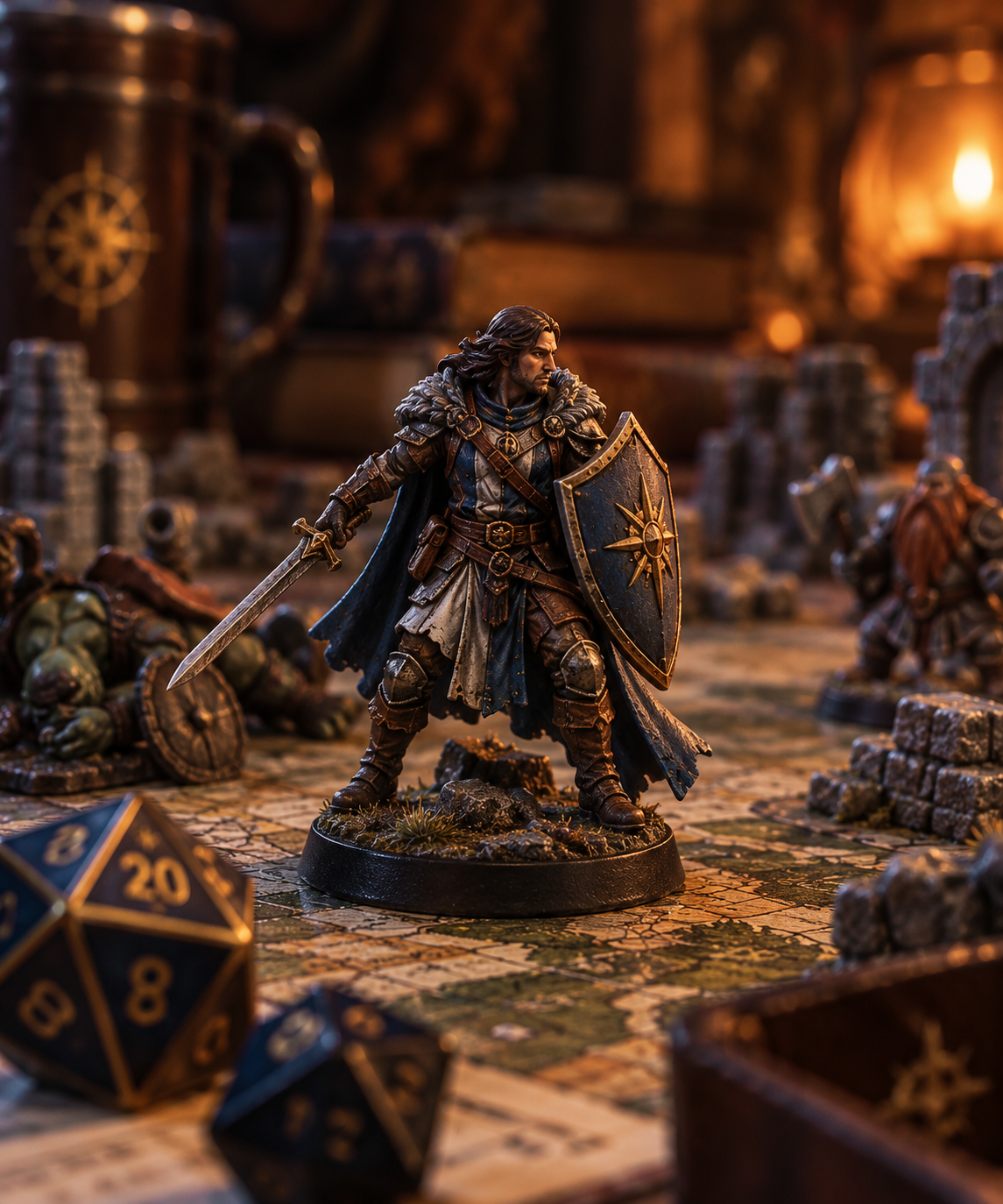
Do You Need a Miniature for Every Monster?
Absolutely not. Please don’t look at a 200-monster bestiary and interpret it as a shopping list.
Even groups that love miniatures frequently mix:
• Painted miniatures
• Unpainted miniatures
• Generic figures
• Tokens
• Paper standees
• Coins
• Spare dice
• And whatever else is nearby
Official D&D guidance explicitly suggests coins, extra dice, paper counters and even candy when dedicated miniatures aren’t available. Earlier D&D Beyond guidance similarly recommends improvised tokens such as game pieces, dice, coins, glass beads and LEGO pieces as perfectly workable representations.
So maybe your player characters have beautiful miniatures.
The six goblins? Six tokens.
The dragon? Maybe tonight it’s a mug.
Everyone knows what the mug represents. Fear the mug. The goal is clarity, not museum accuracy.
Painted or Unpainted Miniatures?
Mechanically? Makes absolutely no difference.
Emotionally? That’s personal.
Unpainted miniatures still show:
• Position
• Character silhouette
• Monster size
• And battlefield relationships
Painted miniatures add:
• Visual identity
• Material detail
• Color
• Character recognition
• And, for many players, another layer of immersion.
Painting is also an entire hobby in its own right. Some players love spending hours painting the characters they’ll eventually use, others absolutely do not.
Neither person should be required to become a miniature painter just because they want to play an RPG. This distinction matters enormously to us at Handcrafted Heroes.
We love miniature painting. But the time required to paint miniatures and the desire to play with painted miniatures are two completely different things.
Some people want the hobby, some people want the finished experience. Both are valid.
What About Tokens?
Tokens are fantastic, especially for enemies. A token can communicate: this creature is here without requiring you to own a physical miniature for every monster that might appear during an adventure.
They are:
• Cheap
• Compact
• Easy to store
• Easy to prepare
• And extremely readable on a map
For a beginner table, I’d happily recommend: hero miniatures + enemy tokens if you want some of the physical presence of miniatures without immediately building a collection.
Your heroes get distinct physical identities. Enemies remain easy to represent, and your house doesn’t slowly become a miniature warehouse. Yet.
What About Paper Miniatures?
Another perfectly legitimate middle ground. Print or draw characters. Place them in simple stands. Done.
You retain:
• Visual identification
• Position
• Scale
• And map readability
without the cost or storage requirements of three-dimensional miniatures.
This is a recurring theme throughout tabletop gaming: there’s almost always a version between “nothing” and “premium hobby setup.” Use it.
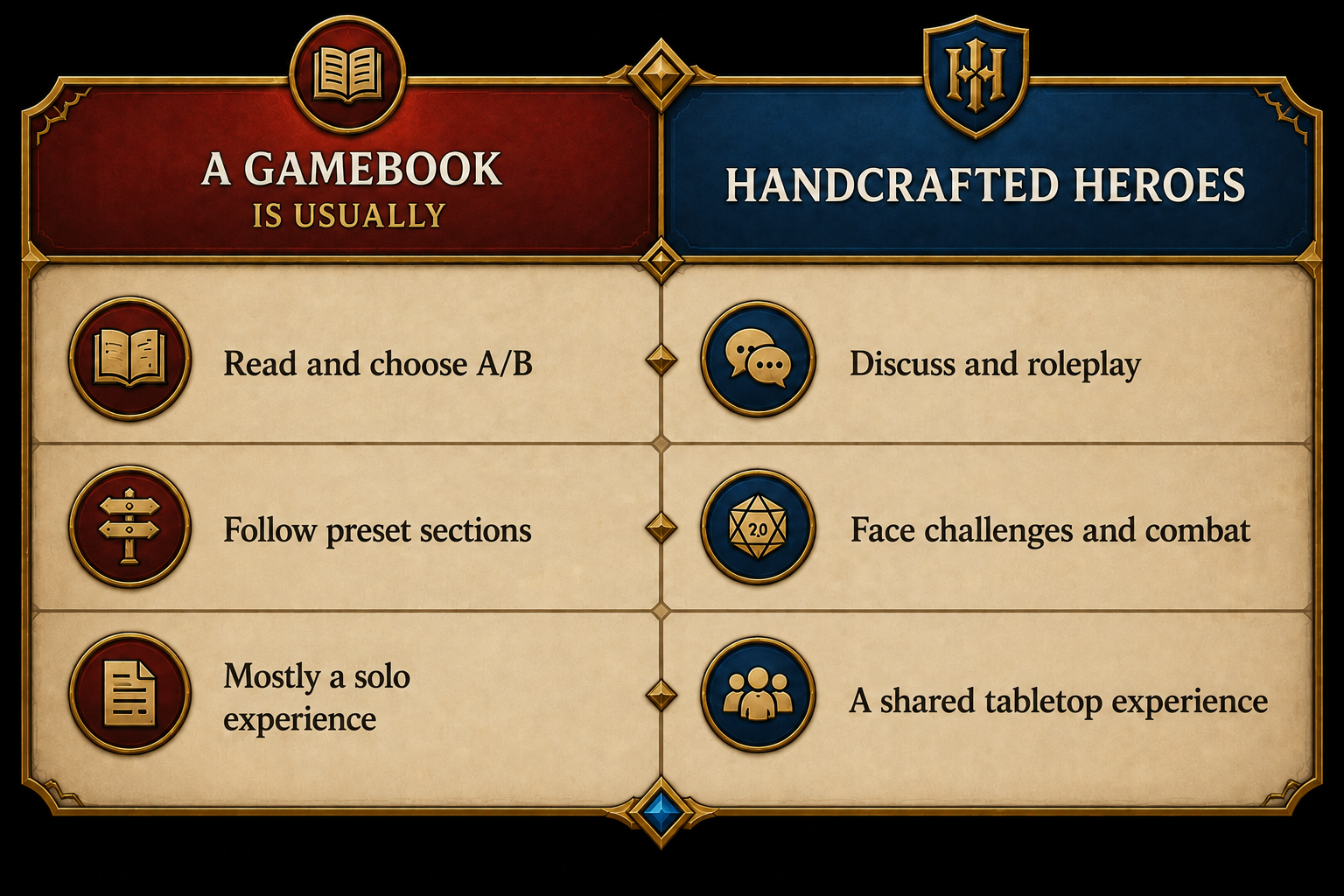
Miniatures vs Tokens vs Theater of the Mind
| Theater of the Mind | Tokens / Stand-ins | Miniatures | |
|---|---|---|---|
| Cost | Very low | Low | Varies |
| Setup | Minimal | Low | Low–High |
| Position clarity | Depends on description | High | High |
| Tactical play | Moderate | High | High |
| Visual immersion | Imagination-led | Moderate | High |
| Storage required | None | Minimal | Potentially significant |
| Character identity | Imagined | Visual marker | Strong physical presence |
| Best for | Fast/simple scenes | Practical tactical play | Tactical + tactile experience |
There isn’t a winner. There are situations.
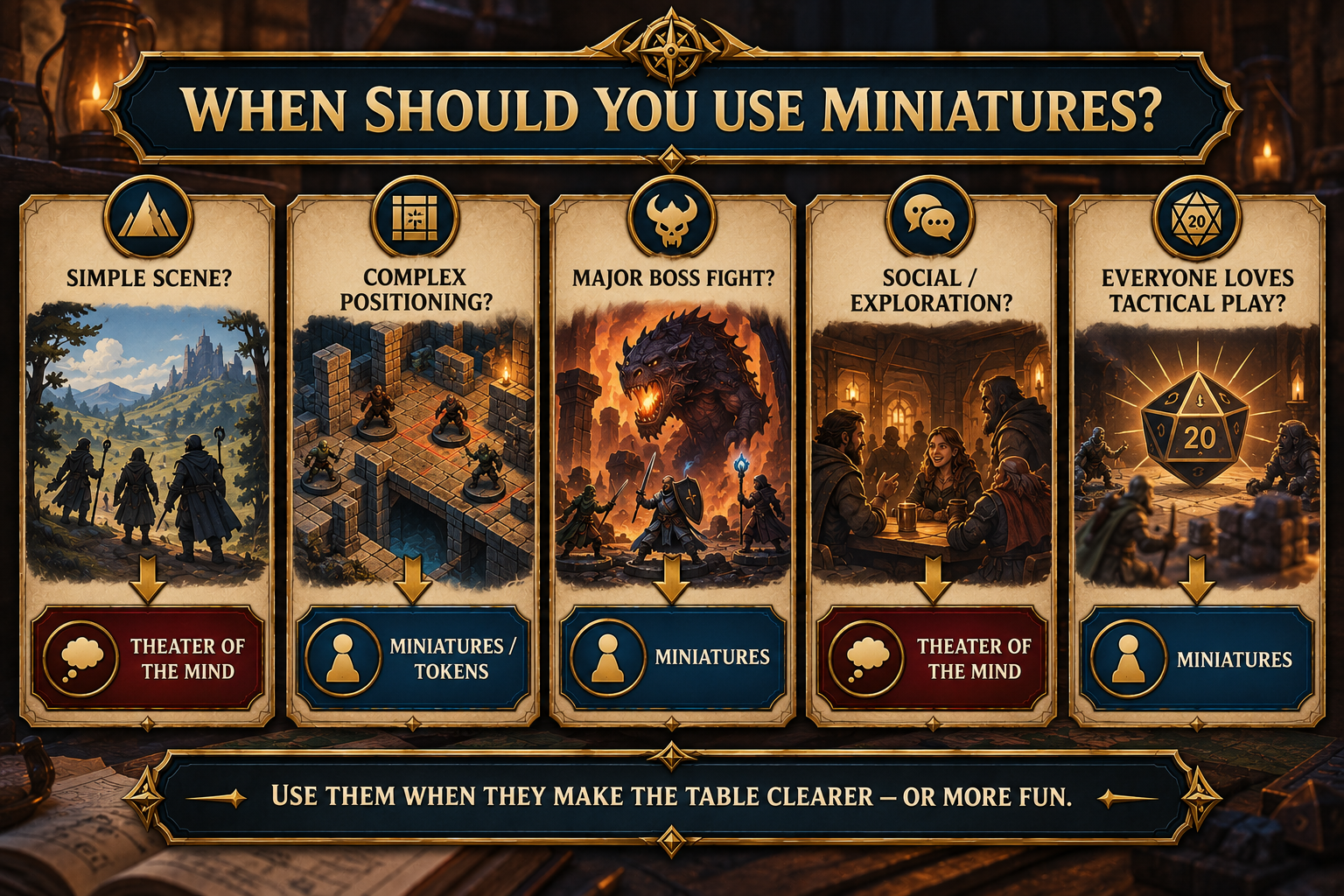
When We’d Use Theater of the Mind
Simple encounters
Two enemies.
Straightforward environment.
No complicated positioning.
Keep the story moving.
Social scenes
You probably don’t need to place the innkeeper exactly three squares from the bard.
Unless something has gone terribly wrong.
Travel and exploration
Description often creates a much larger world than physical terrain reasonably can.
Unexpected encounters
The players started a fight somewhere you absolutely did not expect?
No need to stop the session while the DM constructs a miniature diorama of the bakery.
Just play.
D&D Beyond specifically recommends keeping theater of the mind available even for groups that normally use grids because small encounters can resolve more quickly and transition naturally between exploration, role-playing and combat.
When We’d Bring Out the Miniatures
Complex combat
Several heroes.
Several enemies.
Terrain.
Multiple objectives.
Now the visual information earns its setup time.
Position matters
Cover.
Range.
Movement.
Choke points.
Areas of effect.
The more spatial questions the encounter asks, the more useful a shared physical representation becomes.
Major set-piece battles
The dragon.
The final confrontation.
The ruined throne room you’ve been approaching for eight sessions.
Sometimes physically seeing the encounter makes the moment feel special.
Players enjoy tactical play
This is perhaps the easiest answer.
If your table gets excited when the map appears…
use the map.
Tools should serve enjoyment.
Not ideology.
You Don’t Have to Choose One Style Forever
This is probably our actual recommendation. Use both.
Role-playing conversation? Theater of the mind.
Travel? Theater of the mind.
Tiny skirmish? Probably theater of the mind.
Complicated dungeon room with six enemies, elevation and environmental hazards? Map.
Major boss? Miniatures.
Unexpected bar fight? Maybe three coins and a salt shaker.
You don’t need to declare:
“WE ARE A MINIATURES TABLE.”
or:
“WE PLAY EXCLUSIVELY THEATER OF THE MIND.”
D&D itself supports both approaches, and official guidance explicitly recommends being comfortable switching between narrative combat, quick diagrams and grids depending on what best serves the scene.
Think of them as tools in the same kit. Use the one that solves the current problem.
What If You Don’t Own Any Miniatures?
Use something else. Seriously. Coins, tokens, meeples, paper standees, spare dice, small pieces of card with names written on them.
If everyone at the table understands:
“This represents the owlbear.”
then congratulations.
You have successfully represented the owlbear.
The tactical purpose of a miniature is to make position visible. A beautifully painted model can add atmosphere, personality and physical presence, but the rules don’t suddenly stop functioning because your goblin is currently represented by a coin.
This is especially useful when you’re new to the hobby. You don’t need to build an entire miniature collection before discovering whether your group even enjoys tactical combat.
Start with what you have. Add the things that make your table better later.
If you’re still assembling your first setup, our beginner guide explains [What you actually need to play a tabletop RPG — and what’s optional].
Painted vs Unpainted Miniatures: Does It Matter?
Mechanically? No. A grey plastic miniature and a beautifully painted miniature occupy exactly the same space on the battle map. They don’t gain Armor Class from highlights. Unfortunately.
But tabletop RPGs aren’t made entirely of mechanics. A painted miniature can make a character feel more specific. The color of the armor, the scars, the weapon. The tiny details that distinguish a fighter miniature from:
“That’s Kael. That’s my fighter.”
That emotional distinction is difficult to measure on a character sheet, and it becomes stronger over time.
The miniature that represented your character during their first fight may eventually be the same miniature standing on the table during their final battle months later. At that point, the object has accumulated something paint alone couldn’t give it: history.
That’s one of the reasons physical components can matter even when they’re technically optional. They don’t create the story. They can become part of how you remember it.
Do You Need a Miniature for Every Monster?
Absolutely not. This is another excellent way to accidentally turn:
“I want to try D&D.”
into:
“Apparently I now operate a miniature warehouse.”
If you’re running an encounter with:
• Six goblins
• Three wolves
• Two guards
• A necromancer
• And one extremely inconvenient skeleton
you don’t need eleven individually painted models before the session is allowed to happen. Mixing components is perfectly fine. Maybe the player characters have dedicated miniatures because those figures return every session.
Enemies use tokens. Important villains get miniatures. A major monster gets the impressive centerpiece model.
That creates a very practical hierarchy:
Recurring heroes → dedicated miniatures
Important enemies → miniatures when useful
Temporary creatures → tokens / standees / whatever works
Huge memorable encounter → bring out the monster everyone immediately regrets seeing
Your table doesn’t need physical perfection. It needs clarity.
Miniatures Can Also Slow the Game Down
This side of the conversation matters too. Physical components can increase immersion. They can also create setup.
You need to:
• Find the correct miniature
• Prepare the map
• Place enemies
• Move pieces
• Measure or count distances
• Possibly prepare terrain
• And pack everything away afterwards
For a major tactical encounter? That can be completely worth it.
For a thirty-second conversation with two guards? Probably not.
This is why we wouldn’t recommend treating miniatures as an all-or-nothing play style. Use them where their value exceeds their friction.
A complicated battlefield with several enemies and environmental hazards? Miniatures can make everything much clearer.
A conversation around a campfire? Your imagination is already doing the job.
And that leads to a much more useful question than:
“Should we use miniatures?”
Ask:
“Would miniatures make this particular scene better?”
The Best Table Can Use Both
You don’t have to choose a side.
This isn’t:
TEAM MINIATURES
versus
TEAM THEATER OF THE MIND
A session can move naturally between them.
Imagine: The party travels through the mountains. Theater of the mind. They reach a ruined fortress and speak with the survivors. Theater of the mind. They investigate strange noises beneath the keep. Still imagination.
Then they open the final door. The GM puts a battle map on the table. Places the heroes. Adds several enemy miniatures. Then reaches into the box and puts down something considerably larger.
Everyone suddenly becomes very interested in their remaining spell slots. That’s a fantastic use of physical components because the transition itself communicates that something important is happening.
Miniatures become punctuation. You don’t need an exclamation mark after every sentence. Use one when it matters.
So, Do You Need Miniatures to Play D&D?
No.
You can play Dungeons & Dragons entirely through description and imagination.
You can use tokens, coins, paper standees, digital maps, miniatures, or some combination of all of them.
The better question is:
What kind of experience does your table want?
If your group loves tactical positioning, seeing the battlefield and moving characters through physical space, miniatures can be enormously useful.
If your group prefers fast, cinematic scenes driven primarily through conversation and imagination, theater of the mind may suit you better.
If you love beautifully painted characters and watching your party physically appear on the battlefield?
That’s a perfectly good reason to use miniatures too. Not everything at the table needs to justify itself through mechanics. Sometimes an object matters because it makes the imaginary world feel a little more real.
At Handcrafted Heroes, that’s the part we love. A miniature isn’t required for your character to exist. But somewhere between the first time you place that tiny hero on the table and the tenth time they survive something they absolutely shouldn’t have… it stops being a miniature.
It becomes: your hero. And that’s a very different thing.
Musha
Handcrafted Heroes