What Do You Need to Play a Tabletop RPG? Beginner Checklist
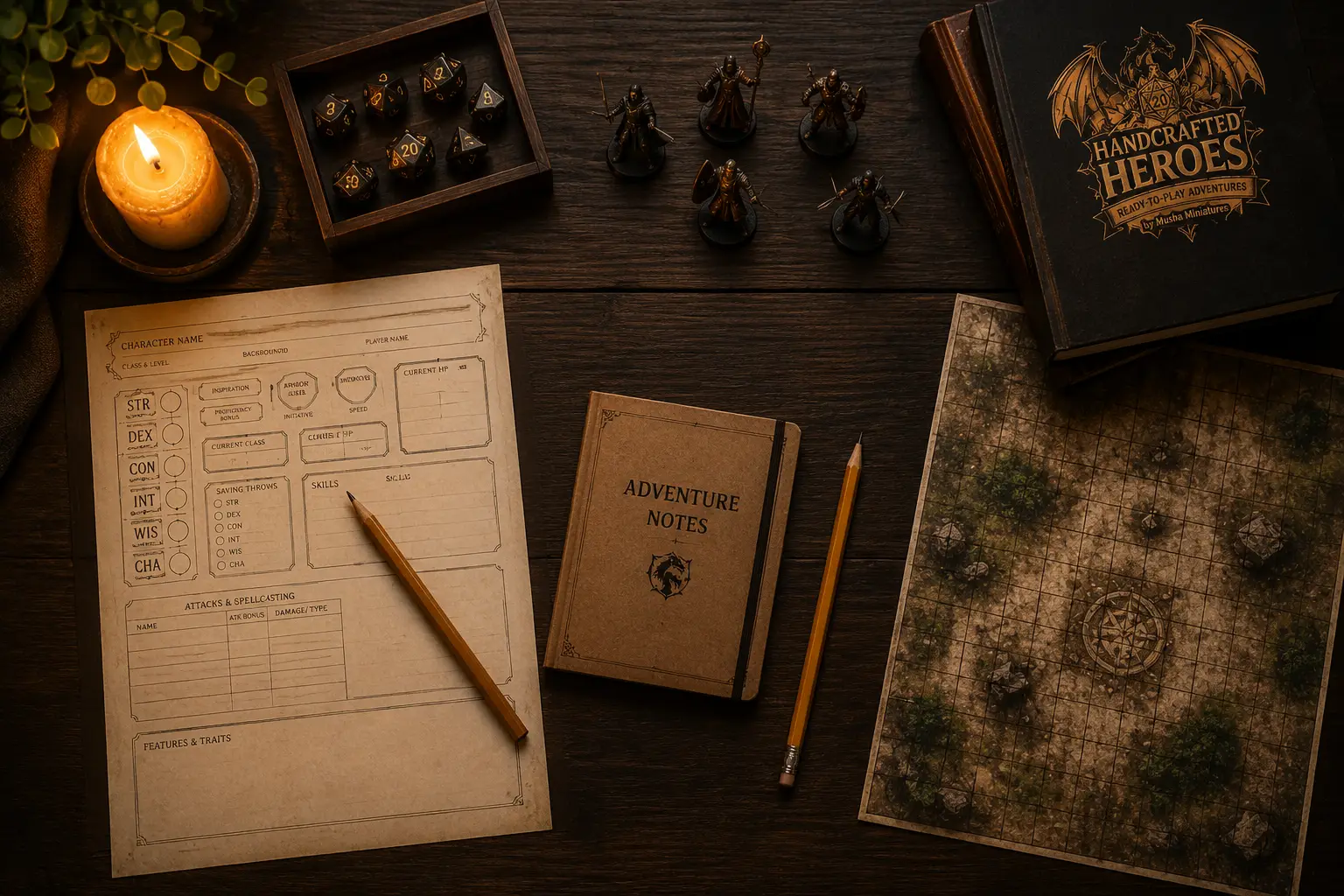
What Do You Need to Play a Tabletop RPG? Less Than You Think
Search for “tabletop RPG setup” long enough and you might reasonably conclude that your first adventure requires three rulebooks, forty painted miniatures, handcrafted terrain, seventeen sets of dice and a dedicated room with suspiciously atmospheric lighting.
It doesn’t.
All of those things can become wonderful parts of the hobby.
But there’s a difference between what you need to play and what can make playing even better.
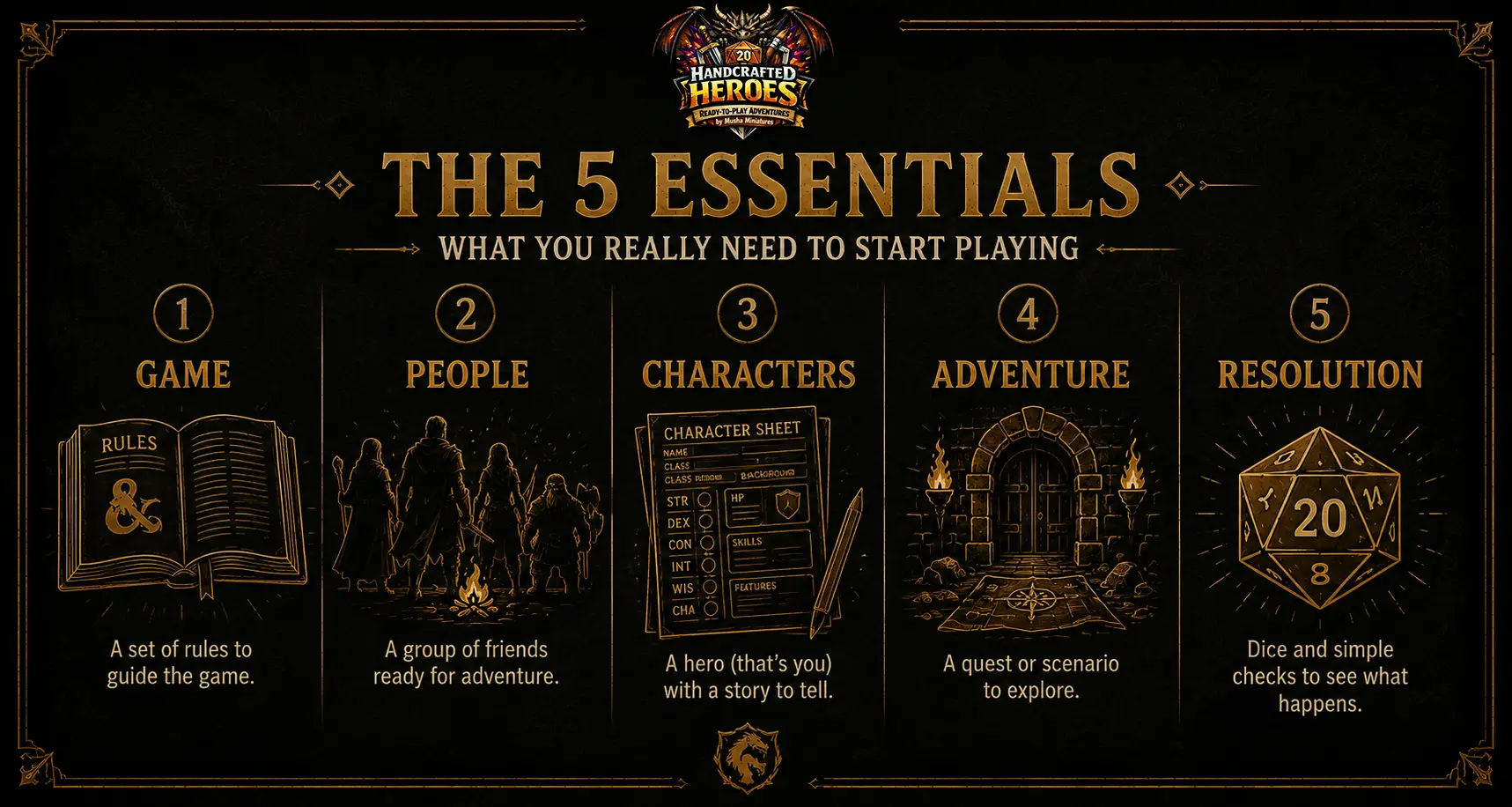
For most tabletop RPGs, the essentials are surprisingly simple:
a game, the people required to play it, characters, a starting situation and whatever that particular system uses to resolve uncertain outcomes.
Everything after that is another layer you can choose to add.
So before you start filling a shopping cart, let’s build your first table from the ground up.
Layer One: What You Actually Need
Strip the hobby down to its foundations and the list gets much shorter.
1. A Tabletop RPG
You need a game.
That doesn’t necessarily mean you need to buy a 300-page hardcover rulebook.
Many RPG publishers offer free rules, quickstarts or introductory material designed specifically to let a group learn the basic system before investing in the complete game.
Starter sets and beginner boxes are another option. Rather than handing newcomers the entire ecosystem at once, they typically package together the rules and materials necessary for an introductory experience.
The Pathfinder Beginner Box is a particularly literal example: its current version contains player and GM books, an introductory adventure, pregenerated characters, blank character sheets, reference cards, dice, a map and more than 100 cardboard pawns.
You don’t need that exact amount of material to play a TTRPG.
The point is that beginner products can do the filtering for you.
They answer:
“Which parts of this enormous game do we actually need tonight?”
If you haven’t chosen a system yet, start there.
Choose your first tabletop RPG →
2. The Right Number of People
This depends entirely on the game. A traditional setup might involve one Game Master and several players. But that isn’t a universal requirement.
Some RPGs work with two people. Some distribute narrative responsibilities instead of using a traditional GM. Some are designed for solo play.
So don’t begin with:
“We need five people before we can play.”
Begin with:
“How many people does this game need?”
That’s a much easier problem to solve.
What a tabletop RPG is →
If getting the whole party together is the real problem, you may also want to explore [Playing a tabletop RPG with only two people].
3. Characters
You need someone to become when the adventure begins. Depending on the RPG, you’ll either create a character yourself or use a pregenerated character, often shortened to pregen.
When you’re ready to build your own instead, start with our guide to [Creating your first RPG character].
For a first session, pregenerated characters are seriously underrated. Instead of spending the first hour deciding between abilities you don’t yet understand, you can pick someone interesting and discover how the game works by playing them. There’s nothing inferior about that. You can learn character creation later, once terms like attributes, skills, checks and actions actually mean something to you.
In fact, beginner products frequently include pregenerated characters for exactly this reason. Pathfinder’s current Beginner Box, for example, includes four premade characters alongside blank sheets for groups ready to create their own.
4. Something to Start the Adventure
Rules aren’t an adventure. You also need a situation.
A missing person.
A haunted house.
A village under attack.
A derelict spaceship broadcasting a distress signal.
A suspiciously wealthy goblin asking you to deliver a package and refusing to explain why it is ticking.
Someone — traditionally the GM — needs enough material to put the characters somewhere interesting and ask:
“What do you do?”
For beginners, a published introductory adventure or quickstart scenario can remove a huge amount of preparation. You don’t need to write your first campaign before you’ve played your first session. That’s a little like deciding you need to build a car before you’re allowed to learn how to drive.
5. Whatever Resolves Uncertainty
For many RPGs, that means dice. But not every TTRPG uses the same dice. And not every TTRPG uses dice at all.
Dungeons & Dragons famously uses several polyhedral dice, with the d20 playing a central role in many checks.
Other games use pools of six-sided dice. Some use cards. Others use different resolution systems entirely.
So don’t buy a huge collection of polyhedral dice before you’ve chosen your game. Find out what your system uses. Then get that.
This sounds painfully obvious until you discover the tabletop hobby’s remarkable ability to convince people that owning 147 dice is somehow a perfectly reasonable logistical decision.
It will happen eventually.
There’s no need to rush.
Layer Two: The Things That Make Playing Easier
Now we’re moving out of required and into very useful.
These aren’t the heart of the game.
But you may be glad they’re on the table.
Character Sheets
Your character sheet keeps track of the information the game needs about your character.
Abilities.
Skills.
Equipment.
Health.
Spells.
Whatever matters to that system. It can be printed or digital. For your first session, don’t worry if half the sheet looks like arcane accounting. You’ll understand why those numbers exist as they become relevant.
Pencils and Something for Notes
Yes, pencils.
Not glamorous.
Extremely effective.
Names will appear during the adventure.
Clues.
Locations.
Items.
The name of that NPC everyone loves and the GM absolutely did not expect to become important.
Write them down.
Your future self will be grateful.
Quick Reference Material
This can be incredibly useful for a beginner.
- What can I do on my turn?
- Which die do I roll?
- What does this condition mean?
- Which actions are available?
A good reference card lets players answer simple mechanical questions without repeatedly searching through the full rules.
Again, there’s a reason beginner products include them: Pathfinder’s Beginner Box provides action/reference cards specifically to help players plan and track their turns.
A Comfortable Place to Play
This deserves more attention than it usually gets. A four-hour session at an uncomfortable table is still a four-hour session. Make sure people can sit comfortably.
There’s enough room for whatever materials the game uses. Everyone can hear each other. And, ideally, nobody needs to move an entire battlefield every time somebody wants another slice of pizza.
The table doesn’t need to look spectacular. It needs to work.
Layer Three: The Things That Make the World Reach the Table
This is where need becomes experience.
None of the following determines whether you’re “really” playing a tabletop RPG.
But each can change how the imaginary world feels.
Miniatures
A miniature does something interesting. Before anyone speaks, it gives a character physical presence.
The fighter isn’t just:
Fighter — 28 HP.
She’s standing there.
You can see her shield. Her armor. The enormous axe that probably explains several questionable personality traits.
Miniatures are particularly useful in games where positioning matters, but their value isn’t purely tactical. They can also strengthen character identification.
That little figure gradually becomes: your character.
And when the same miniature survives battles, villains and catastrophically poor decisions across several sessions, it starts carrying memories with it.
Do you need miniatures?
No.
Can they become one of the most emotionally satisfying physical parts of the hobby?
Absolutely.
That’s one reason we care so much about them at Handcrafted Heroes.
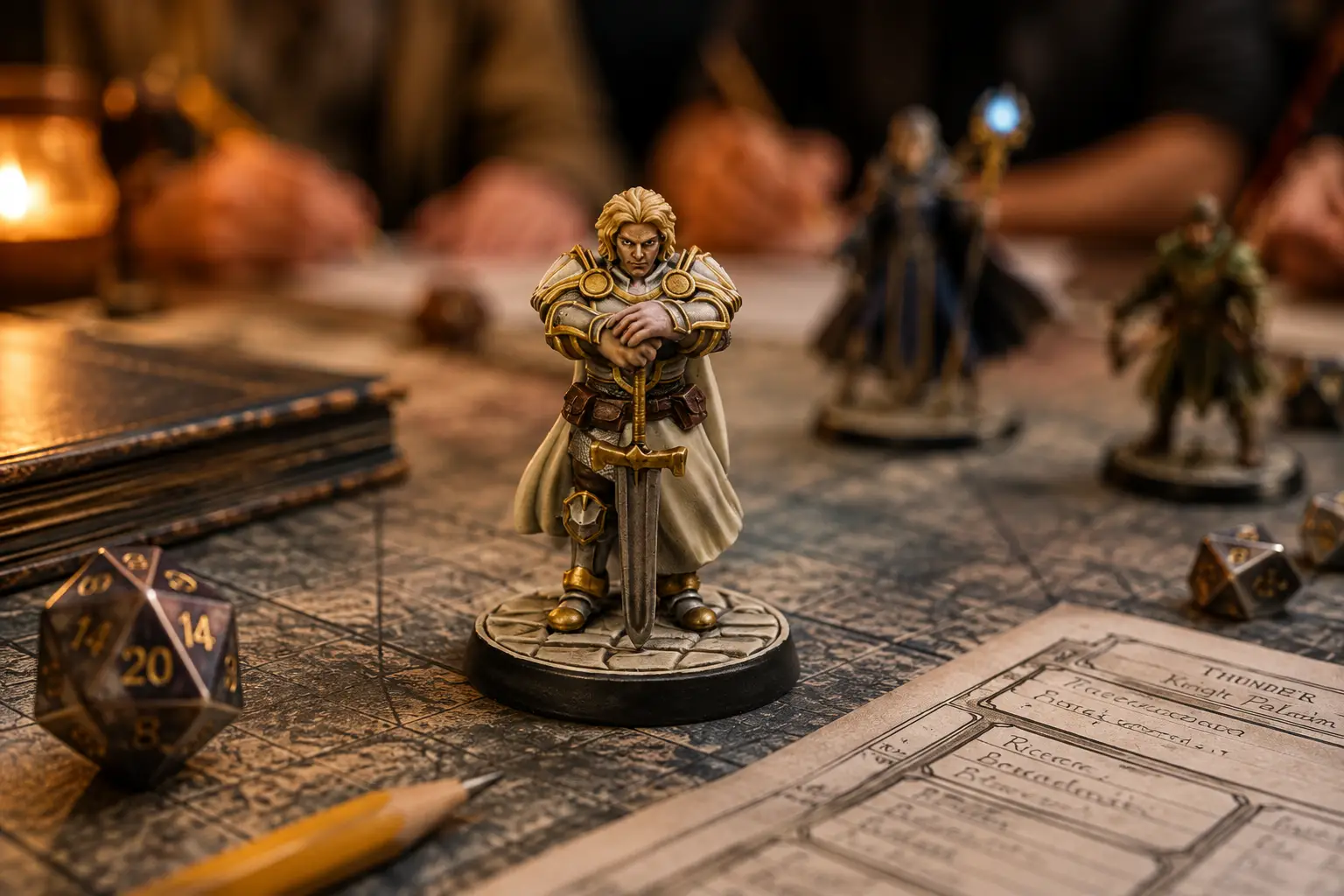
Whether you need miniatures to play D&D →
Battle Maps
A battle map translates imaginary space into visible space.
- Where is the door?
- How far away is the monster?
- Can the rogue reach that pillar?
Exactly how many people are standing in the dragon’s breath weapon because apparently nobody learned anything from last time?
For tactical games, a map can make combat significantly easier to understand. Other groups prefer theater of the mind, where environments and positions exist primarily through description and imagination. Neither approach is inherently superior.
They create different experiences.
How battle maps work in tabletop RPGs →
Terrain
Walls.
Doors.
Trees.
Ruins.
Furniture.
Tiny treasure chests that somebody has spent an unreasonable amount of time painting.
Terrain pushes the table further toward a miniature stage. It’s particularly satisfying for groups that enjoy tactical encounters and the physical hobby surrounding miniatures.
Again: optional.
Very optional. Very cool.
Music and Ambience
This is probably one of the easiest immersion upgrades. You don’t need a professionally composed soundtrack for every scene.
A subtle tavern ambience. Rain during an investigation. Distant forest sounds. Low fantasy music during exploration.
Used carefully, sound changes the emotional temperature of the room without demanding attention.
Just remember: the soundtrack should support the players. Not compete with them.
Physical Props
Hand somebody an actual letter instead of telling them:
“You find a letter.”
Suddenly the table behaves differently.
People turn it over. Examine the handwriting. Look for hidden marks. Pass it around.
Props can transform information into interaction.
Keys, maps, coins, sealed envelopes, cards and journals can all bridge the gap between imaginary object and physical experience.
You don’t need them. But they’re a wonderful example of what tabletop RPGs can do especially well: make an imaginary world briefly feel tangible.
The €0 First TTRPG Session
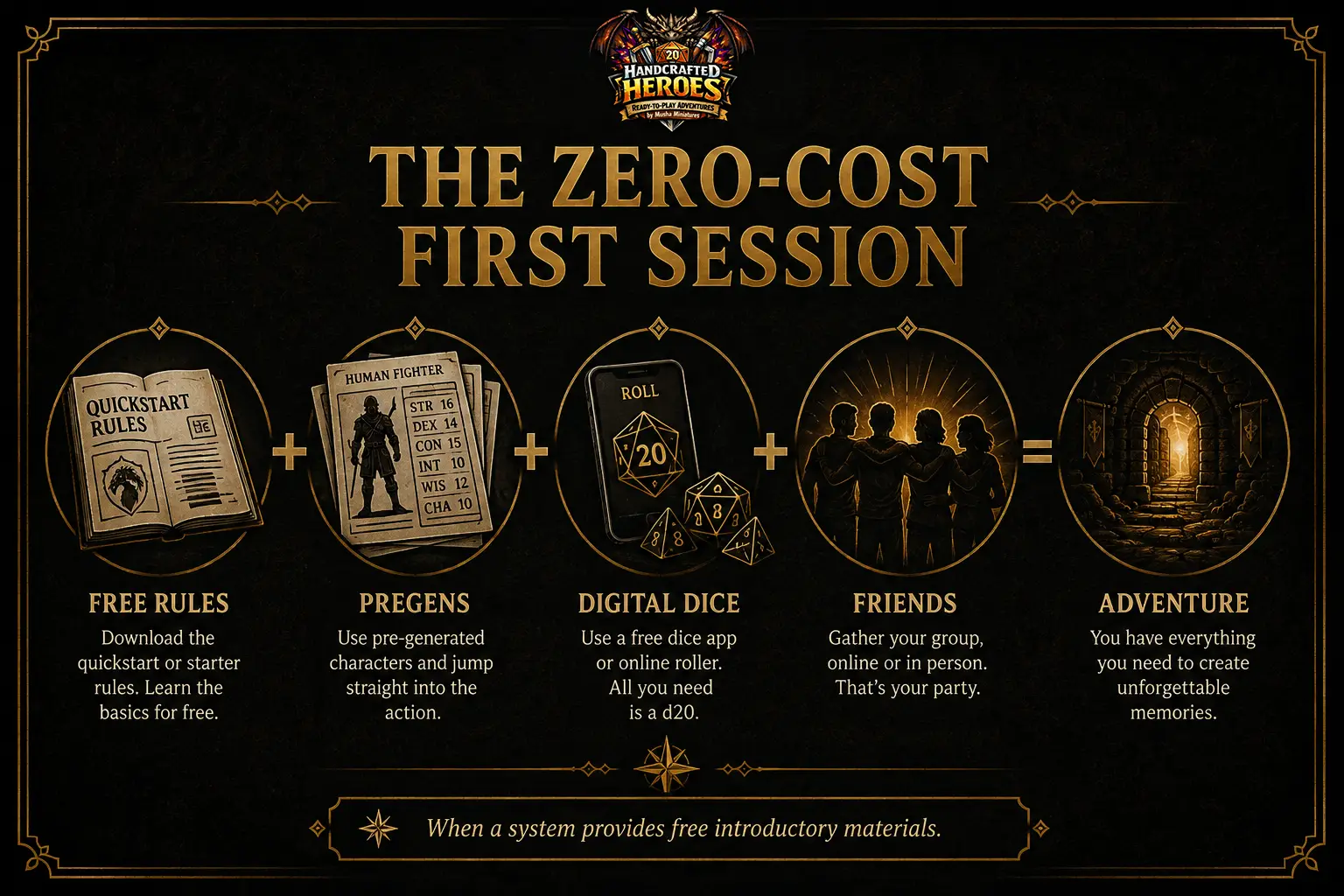
Here’s a useful challenge. Could you play your first tabletop RPG without buying anything?
Potentially, yes.
The exact options depend on the game, but a setup might look like:
Free quickstart rules
+
Free introductory adventure
+
Pregenerated characters
+
Digital dice or another included resolution method
+
Voice/video chat or a table you already own
+
Friends
= first session
Free quickstarts are a normal part of the modern TTRPG ecosystem. They’re designed to give groups enough rules and material to experience a game without requiring the full product line first. Community discussions about quickstart design similarly tend to emphasize core mechanics, pregenerated characters and a playable introductory scenario rather than reproducing an entire rulebook.
That’s why we’d strongly recommend trying before assuming the hobby requires a large investment.
You can always build the table later.
Then Why Do Starter Sets Exist?
Because there’s another resource beginners don’t have much of: context.
When you’re completely new, you don’t know which rules matter. Which dice matter. Whether you need a map. How characters are created. What the GM should prepare.
A good starter set or beginner box isn’t valuable because it gives you more stuff.
It’s valuable because somebody has already decided:
“This is enough to begin.”
That’s an important distinction.
You’re paying partly for components. You’re also paying to remove decisions.
The best beginner products reduce the distance between:
“This game looks interesting.”
and
“We’re playing.”
That’s a philosophy we happen to believe in quite strongly.
The Table We’d Build
Now suppose we’re not asking:
What’s the minimum required?
Suppose we’re asking:
What would make the first session feel special?
Our table would probably look something like this:
- A ready adventure.
- Characters that can start immediately.
- Clear rules references.
- A set of dice for everyone who needs them.
- Painted miniatures representing the heroes and important enemies.
- A battle map for encounters where positioning matters.
- A little ambient music.
- Enough physical material to make the world feel present without covering the table in clutter.
And snacks. Obviously snacks.
Notice what isn’t on that list: three weeks of preparation.
That’s the distinction we’d make between a complete table and a complicated table. Adding something should make the experience easier, clearer or more immersive. If it only gives you another thing to prepare before everyone can play, ask whether you actually need it.
This is very close to the philosophy behind Ready-to-Play at Handcrafted Heroes: simplicity shouldn’t remove depth from the adventure; it should remove friction before the adventure begins.
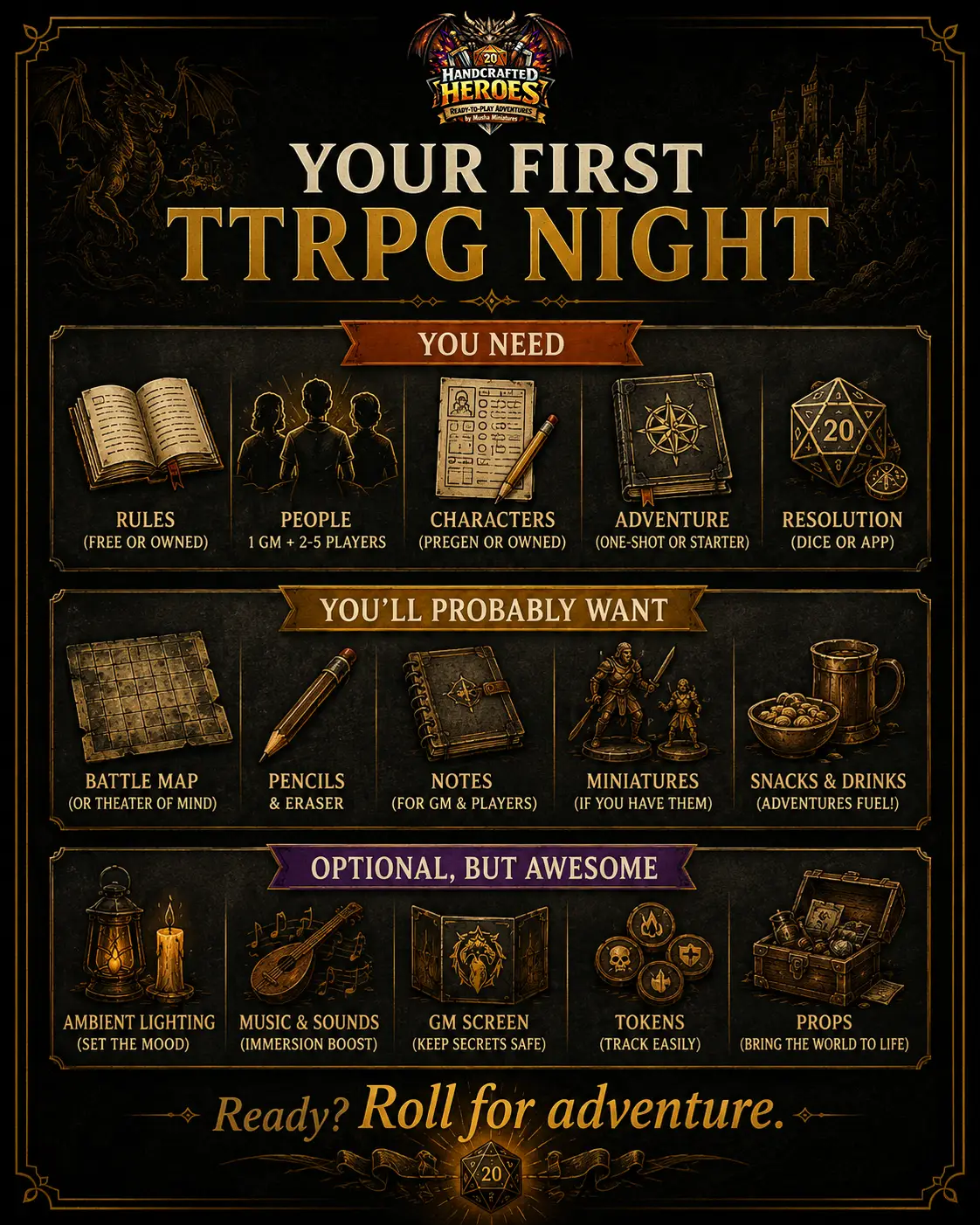
Your First TTRPG Night Checklist
Here’s the version worth saving.
You need
☐ A tabletop RPG
☐ The people required by that game
☐ Characters
☐ An adventure or starting scenario
☐ The game’s resolution tools
☐ Somewhere to play
You’ll probably want
☐ Character sheets
☐ Pencils
☐ Notes
☐ Quick-reference material
☐ Water
☐ Snacks
Optional, but potentially awesome
☐ Miniatures
☐ Battle map
☐ Terrain
☐ Music
☐ Props
☐ Extra dice
☐ The dice you bought because they looked nice
☐ The other dice you definitely didn’t need but bought anyway
Buy Less. Play First.
Musha
Handcrafted Heroes Founder